[
Author's Note: Some of the topics and comments below may be offensive to some viewers as this covers the not-so-easy topic of contraception and sex. Though I avoid all graphic descriptions some of the topics may make readers uneasy. Nevertheless, some of the things I quote are what our friends and children are being taught and in many cases what we've grown up with as well. If we are ever going to understand them we need to confront them with faith, prayer, and courage.
Similarly, there are no restrictions on comments, so please feel free to comment below.]
Sometimes the illusion of choice is more attractive than
real choices and real consequences. It’s not unlike a beautiful woman or
handsome man who, on the outside, is attractive, desirable, and (for many)
ideal to go after. Yet when we find out that this or that attractive person is
self-absorbed, mean-spirited, or more concerned with remaining attractive than
anything else we are often taken aback—we’re almost shocked. The same is true
with many other things: when they fail to meet our expectations we may be
disappointed. Stronger still, when things are contrary to how they present
themselves we are angered, disgusted at, and are repelled from that same person
or thing. The object that was once beautiful and attractive becomes an object
of scorn and derision.
Indeed, what is this thing—this idea—that promotes freedom
of choice, dresses attractively, and draws many in as a solution to your
problems? This idea is contraception. Now for many who support contraception this
seems crazy or stupid. Indeed, many
people seem to go out of their way to not find fault with contraception or the
reasons behind using it, e.g., “people are having sex anyway, they should be
safe!” and “it makes my sex life better [because I can have more of it and not
worry about pregnancy].” Of course, perhaps everything I will say below is, in
fact, stupid and crazy. But if, as contraception websites claim, you are open
to different ideas—even ones that disagree with your own—perhaps you will
consider something you hadn’t before.
 |
| Generic image of an angry woman who may think I'm a woman hater or want to turn women back into stay-at-home-aspire-for-nothings. I assure you I'm not. Please just bear with me! |
I will illustrate my points more specifically below. For
now, I want to share one quote (a bit long) that I believe illustrates a theme
in the contraceptive position. It is framed very practically and seen as both
discerning and tolerant. It only wants the best for young men and women, so it
seems. It states that:
Young people can be very
interested in the moral and cultural frameworks that bind sex and sexuality.
They often welcome opportunities to talk about issues where people have strong views,
like abortion, sex before marriage, lesbian and gay issues and contraception
and birth control. It is important to
remember that talking in a balanced way about differences in opinion does not
promote one set of views over another, or mean that one agrees with a
particular view. Part of exploring and understanding cultural, religious
and moral views is finding out that you
can agree to disagree.
…
Attempts to impose narrow moralistic views about sex
and sexuality on young people through sex education have failed. Rather than trying to deter or frighten
young people away from having sex, effective sex education includes work on
attitudes and beliefs, coupled with skills development, that enables young people to choose whether or
not to have a sexual relationship taking into account the potential risks
of any sexual activity.
…
Young people get information
about sex and sexuality from a wide
range of sources including each other, through the media including
advertising, television and magazines, as well as leaflets, books and websites
(such as www.avert.org) which are intended to be sources of information about
sex and sexuality. Some of this will be accurate and some inaccurate. Providing
information through sex education is therefore about finding out what young
people already know and adding to their existing knowledge and correcting any
misinformation they may have. (avert.org) (Italics and underlines added for emphasis by me)
It seems strange for a website, or anyone, to advocate safe,
restricted, and “responsible” sex while at the same time being perfectly fine
both allowing and taking in all ideas. We should choose carefully which person
we have sex with but we should be open and receptive to all ideas about sex?
Maybe it’s time we started worrying less about protecting our genitals and
invested more time protecting and developing our ideas about sex and
relationships. It seems to me like the contraction rate of bad ideas in both
men and women is very high when you allow them to consider and tolerate every
idea (i.e., “agree to disagree”).
Much like (casual) sex, bad ideas are can be very satisfying
and fulfilling while they last. Likewise they can also leave you with feelings
of regret, unintended consequences, and being forced into situations you didn’t
want to get into. Bad ideas are very contagious and easy to spread. It’s even
more dangerous because it can come from family, friends, a loved one, teachers,
media, or you can contract it all on your own.
But rather than dwell on this I’ll get a bit more specific.
Contraception is not only a bad idea, it also sets itself up as a solution to a
problem it contributes to. I realize that I’m swimming against the current of
our culture saying this but there are some nuances here that should be
discussed as well. It is the case that many use contraception of some form;
many use it for pleasure (or “safe pleasure”) and others for medical purposes.
My concern is not for those who use “contraception” for medicinal reasons (necessarily)
such as irregular periods, but my concern is rather (1) with those who use
contraception for its namesake—conta-(con)ception, or a means to prevent
pregnancy. My other concern (2) is those who use contraception for the sake of
more casual sex. I plan to treat both briefly below but I will also return to
these points (especially the first) in subsequent pieces as well.
As such, I first ask a question: unwanted pregnancies and
STDs can certainly be a problem. But why is it that the cause of these things
is sometimes simply attributed to “unprotected sex”? It seems rather the case
that the idea behind “sex” is the root of our problems here. We’ll see if it’s
true.
Many websites and information outlets try to teach and help
identify how one can avoid coercion and undue pressure. This is perfectly good
and fine. Sex
should be freeing,
loving, and mutual. Yet, at the same time, many of these same outlets
aggressively push for using condoms. Sex, they claim, should be pressureless
but we should pressure men to wear condoms because it’s responsible (cf.
Condom Exuses from NHS.uk).
This is simply and clearly another case of allowing one bad
idea (casual sex) as inevitable and
making up additional bad ideas to cover for it. The cascades of rhetoric cannot
hide the logic “If you want to have a fulfilling relationship, good (luck!). If
you want to have casual sex, as it’s your choice, good. Oh, and here’s how.”
Is casual sex supposed to be a good idea as long as you’re
responsible? ‘If you drink excessively but don’t drive’ it is considered
responsible in regards to driving (and health) but it tells us nothing about
drinking. ‘Have sex but be safe’ is responsible in regards to contracting
disease but it doesn’t relate anything about responsibility for sex, much less
relationships (we’ll look at this a bit more in a moment).
 |
| In reality, though, it's just about driking related to driving not about drinking itself--perhaps because it's a value we are unable to teach. |
For now, however, what contraception does as an idea is a few
things: 1) it claims that the opposition, especially religious, wants to turn
women into ‘baby factories.’ 2) it claims that the opposition wants to impose
“narrow moralistic views” while claiming it is open to all ideas and
choices—and they give them to you to choose (They also say "If you can't
be bothered to use a condom then I can't be bothered to have sex with you.”
Condom Excuses,
Dr. Petra Boynton). 3) it claims that it’s the safe, responsible option. I’ll
address (1) in greater detail in the next piece.
There are many implicit claims about contraception (and by
those who advocate their use), but here’s one more: “you can always choose who
you have sex with, but if you choose to have sex with one or many use
protection.”
The strange thing is that they never explain why you would want to have multiple sex
partners—maybe it’s just “fun.” Yes, oddly they do not want to influence why
you have sex but they certainly want to jump in the moment you decide and tell
you how.
But again, what becomes the problem or risk with regards to
casual sex? Many places say that pregnancy and/or STDs are the risks involved,
but are they really the problem? An unwanted pregnancy due to failed
contraception is something that puts someone in a trap—and then contraceptive-types
give you an out. You could have the
child or you could have an abortion. This is especially attractive to teens and
men and women in their 20s and 30s who can’t/don’t want to support a child.
Rather, I would say it seems like they target them: they warn them of the risks
but encourage them to have sex (as long as it’s your choice). In reality,
there’s nothing quite like a prison that says “Freedom” on the door. In this
case, pregnancy is made to be the prison and abortion the door out. Perhaps
it’s the other way around.
 |
| Maybe the door that seems to be the way out is really the way in. |
But perhaps it’s the case that I’ve been wrong about
contraception. It is, after all, the other person’s choice to use the pill or a
condom, so maybe we should all just let others choose what they will and let
them ‘fight it out’ from there. Contraception is just one valid choice among
many.
Okay, that’s fine. Let’s juxtapose two ideas and see if
anything turns up:
+ You should marry
the person you love after a long period of discernment. Through prayer, time,
modesty, and plenty of communication you may then decide to spend the rest of
your life with this person if it is
your vocation. You’ll meet with a priest who helps discuss the many challenges
in marriage and helps both to decide if they’re ready, both individually and
together. When married you can have sex with someone whom you know will be
faithful to you wholly and like no one else. You give of yourself wholly to the
other person even insofar as you are open
to new life. If a new life does come into your own you both see it as a
blessing despite the challenges.
+You should
carefully choose whom you have sex with. You should both be ready, but you should
both be responsible. A child/pregnancy could be a great burden so use
contraception until you’re absolutely ready to have a child. If you choose to
have sex with many people remember to be safe and expect the same from others.
Sex should be safe, fun, and above all freeing. It’s your body and you should
be happy and healthy in it.
I believe I represented both sides well and ask you to
review each and see what emerges. Are both devoid of problems? Of course not. I
will address the first, Catholic, option later but for now I will turn my focus
to the second.
When it comes to presenting these options to children or
teenagers which seems more attractive? Staying with one person (for the rest of
your lives) or having choices? Kids probably don’t think about sex or
relationships in too much detail; they’re just told that if they want answers
there are places they can go to. Or, of course, we could teach children to
masturbate. An example from Planned Parenthood for elementary school students:
“Q. Is it okay to touch yourself?
A. Sure, it's okay. It feels good to touch ourselves, but we should only touch
ourselves in private.” (
Talking to kids about sexuality)
Isn’t this the type of openness we all should want? After
all, when we teach children to use their sexuality to feel good in the way they
want to, how could it negatively affect them, especially if they do it in
private? When you teach children foundational ideas when they’re young they can
carry it into their adult lives with ease, as long as they keep up with it. But,
in the end, “negative feelings about masturbation can threaten our health and
well-being.
Only you can decide what
is healthy and right for you” (
http://www.plannedparenthood.org/health-topics/sex-101/masturbation-23901.htm).
Only you can decide. Not your parents, not your doctor, not any visible code of
morality or ethics. Just you. Planned Parenthood is just here to help, folks.
 |
| Just this reassuring image I found. Nothing suspicious at all. |
Teens, on the other hand, not only know a bit more about sex
they also desire it more. Their passions run a bit higher as well. Because
things always seem to be changing for them they seek permanence in
something—and for many it’s sex. They see it everywhere, some indulge in
pornography or masturbation, many occupy their thoughts with it, and are
encouraged to have it if they think they’re ready. Well, it probably goes
without saying that plenty of teens (and even adults) believe they’re ready.
I suppose somewhere along the way many teens forgot (or we
forgot to tell them) that not only is life itself temporary but sexual
attraction, acts, and desires are even more temporary. One side tells them to
wait and to control themselves through abstinence. The other tells them to
explore their bodies, exploit what is pleasurable to them (in their bodies) for
their health, wait until they’re ready, and then “control” themselves by using
a condom or other contraceptive methods. Perhaps as disease prevention this is
a very good method. Why throw teens into the fire with abstinence? Throw them
into the fire with fire-retardant gloves.
Sexual urges are powerful things and the more we occupy our
minds with sex the more we want it, the more we tend think about it, and the
more it influences our future actions. Will this set you free? Or is this
putting us in a prison, especially when we teach our children to indulge and
explore what is pleasurable to them?—especially with something as intimate and
pervasive as our own bodies?
Is it better to understand and control our passions until we
are ready to use them, or is it better to explore and indulge our passions so
we can learn what benefits us most? But what if it’s too late and we become a
slave to our passions? Who do we depend on when we can’t depend on ourselves or
our inclinations-made-tyrants?
Regardless, contraception remains a physical tool that is
used and promoted by people who see the world physically. Because condoms or
pills do not care about family life, relationships, children, or healthy
relationships they rather speak about only what they can: preventing disease
and pregnancy (in perfect usage). But I must admit that both reasons are
dressed very attractively.
Another reason for this is the already self-admitted rule
for teaching about contraception: For them there are many different values
about relationships, sex, morality, gender, etc. Since they cannot endorse any
single one value for anything, they have to simply talk about the biological merits and function of contraception,
stating them as objective facts (for biological use only) and giving them as a
tool or instrument we place into our own personal value sets. So it’s not that
contraception-ideology doesn’t care about your unique situation, it’s that it
can’t care about your unique situation. All it can do is tell you that it does
this or that biologically and wish you well on that whole happiness thing. But,
biologically speaking, sex is a lot of fun and feels really good, so how could
more sex (and significantly safer sex) not contribute to happiness? Why
wouldn’t you pursue it if you’re ready?
 |
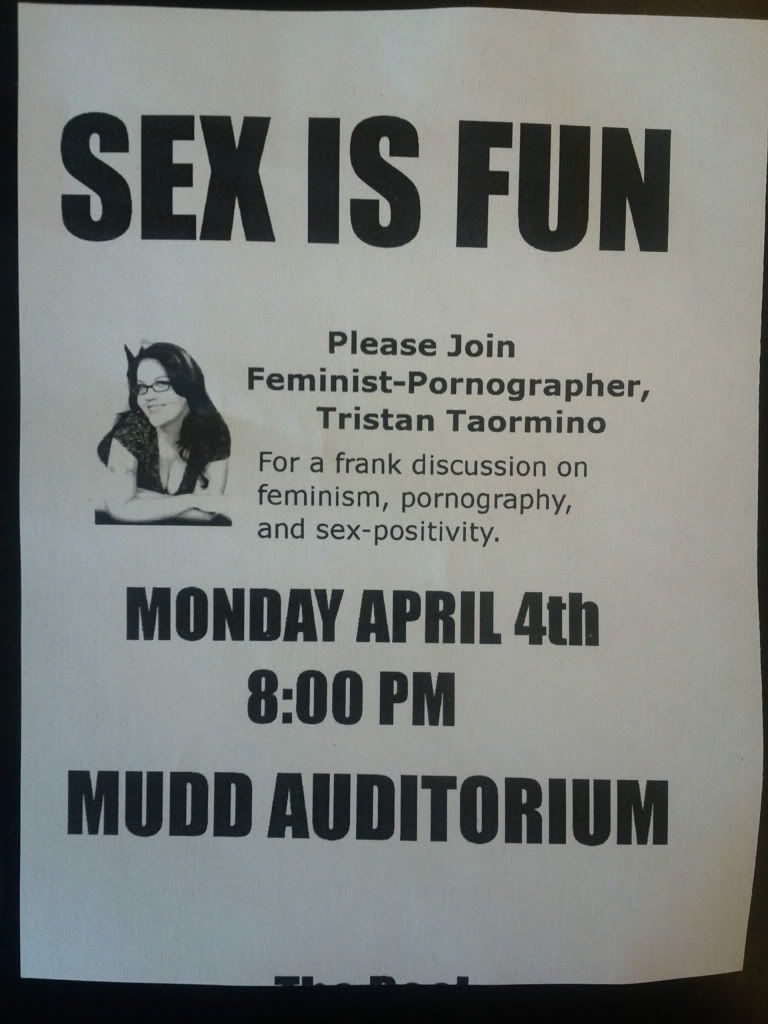
| I guess if it's a frank discussion it can't be that bad. She certainly doesn't seem to promote immoderate behavior. Just tell'n it like it is. |
But we need another angle. Perhaps we need to ask ourselves
some different questions. Questions like ‘is he using a condom because he really
loves me?’ ‘Is she taking the pill because she cares about my well-being?’
Perhaps, but does the pill guarantee that? Does it really make relationships
better or more loving? Does it even help?
Sometimes it comes down to what people look for in sex.
Those who only want sex for pleasure will end up using you or others. But many
more look for sex to be completing, intimate, and loving. Many, in some cases,
see sex itself as all three. Does contraception facilitate or complete any of
these things? When a condom means “I love you” I’ll congratulate you on finding
love. When the pill means “my life is complete” I’ll rejoice that you’ve moved
past more difficult times—such as time before the pill.
But as far as I’ve seen it contraception remains that mirage
that many seek and run towards. Has it really made your life better? Does your
man say he’ll love you forever, but it’s a different story if you’re pregnant?
And men, if you are responsible for a boy or girl can you call yourself a man
by running away? For you see, the challenge of commitment does not lie in how
good your sex is and will be but if in the face of the greatest challenges you
persevere. A child is a challenge
but a blessing because it is by that
fire you can forge a true commitment and completely transform your life. What
is more conducive to commitment in your life? Is it an unplanned pregnancy or
an openness every time to have children if they come?
Do I say this to “scare you from having sex,” as avert.org might say? No. In reality I’m
just beginning to “give you the facts.” Sex is a gift and a blessing, but its
blessing does not lie tat in it is just pleasurable alone. It is a blessing
precisely because it is unitive and procreative. True, holy, and proper sex is
an openness to life, a love for life when it comes, and that expression of
unified love of a husband and wife powerful enough to conceive life and sustain
it happily and lovingly. More still, sex should be the culmination of many
things—it should be the expression of love, commitment, trust, and friendship
and not a tool by which we think we
have all these things. The moment sex becomes a tool is the moment it can be
misused. When we think something can be used against us is precisely the moment
we feel we need protection from and against it.
Contraception is and has been dressing up as that thing you
want and need for a while now. Is there nothing or no one else you can look up
to? Next time, I will attempt to provide you with an alternative you can look up to. I will show you how
contraception makes you a prisoner—especially women—and how, lades, much of the
change we need begins with you. Men and women alike need to change, truly, how
they look at relationships and sex. But the victims in many ways are women who
leave men consequence-free by taking contraception that can (and does) affect
their bodies, all in the name of their own personal pleasure—all the same still
exploited by men looking to use women and women looking to use men.
Next time we will begin scratching the surface of the
Catholic-Christian response and how through it you can be happier and more
fulfilled, with or without sex.