Showing posts with label literature. Show all posts

Thursday, April 25, 2013

The Early Church I-1: History and Morality

(This is the first part of a presentation given on 4/23/2013. This is the extended version. The shorter, presentation version will be the last piece posted after some time for revision.)

See part I-2 here: Organization of the Early Church
See part I-3 here: Why "Catholic"?

(Part II is now out! Since this is part I, I'll just link to II-1. If you're interested and enjoy this series, please see the next parts.)

Prologue

The early Church for many Christians is something that receives little attention. Many see the early Church as a people who were persecuted by the Roman empire and eventually rose to prominence after Christianity was legalized in 313 AD. While these persecutions were very real and Christianity really did triumph, the early Church has a rich history while at the same time a very human history. This is not a bad thing, however, for the mission of the Church is the interaction with sinful humanity in hopes of redeeming it. The Church, the Body of Christ, is both human and divine—a great mystery, and one worth entering. 

Throughout our Catholic history there are been great saints and great sinners, both sorts have been at the highest office in our Church. This should not give us reason to believe that the Church is purely man-made, however, but it rather speaks to the whole history and situation of Israel that came before us. God saw fit to use both good and wicked men to effect His designs, both enemies and anointed leaders (e.g., both good: 2 Kings 22:10-13, 18-20; Ruth 3: 13-17. And the bad: Isaiah 10:5-13; 1 Kings 11). Good men and women drew others to God by their example and obedience to both Jesus and Church. Wicked men and women served as an example that drove people away from vice and led to God by different paths. When power becomes addictive men will abuse power. As a result, those who love the Lord will strive to live heroic humility. Great sinners inspire saints to be even greater.

May we all grow to love the Church in a greater capacity for she is the bride of Christ. Christ's promise has been held since he proclaimed it: the powers of hell have not prevailed against the Church. Even in the midst of corruption and sin she has been protected and safeguarded. Pray that one day we might all be one.


Part I: History

I.A Jew and Gentile

The Catholic Church began in Jerusalem (cf. Acts 1:8, 12) which was a part of the Roman Empire. The Apostles, filled with the Spirit at Pentecost then proceeded to preach the name of Jesus to everyone. Their word spread very quickly and they put a fire in a great number of people from Jews to Gentiles. How Christianity spread was unique to both the Jews and the Gentiles.

For the Jews who came to believe, they followed the prophets and the law of Moses faithfully. They recognized that Jesus was the “suffering servant” as proclaimed by Isaiah nearly 700 years before (Is 42 – 43:12). Similarly, the words and actions of Christ were prefigured in many other utterances by the prophets. These Jews joined the Apostles as followers of Christ. The Jews had the benefit of a rich symbolism, culture, understanding of God, and history of their people to aid their understanding and faith. The Gospel of Matthew is the first precisely because it is meant to bridge the history of Israel with the advent of Christ who is a continuation of that history. This is why Paul said salvation came to all who believed, but “for Jew first, then Greek [i.e., Gentile]” (Rom 1:16). The Jews who accepted Christ could accept Him more fully at this time.
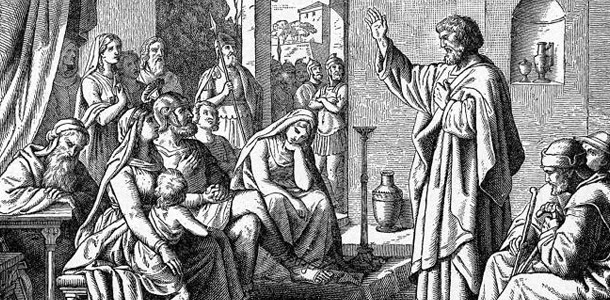
Simeon, a sage of Israel, receives the Messiah whom he has long waited for. Many of the greatest first-generation bishops were Jewish-born and expounded beautifully on Scripture when explaining Christ to both Jew and Gentile.


How the Gentiles (that is, everyone else) were converted was a different story. Many did not believe that the Hebrew Scriptures were inspired, nor were they aware of the history of Israel or salvation. This was not a disadvantage, however, because Christians were now to carry on the mission Israel had been given, to be “a light to the Gentiles” (Is 49:6b, Acts 14:47). In order to convince the Gentiles it must be done with deeds. In this manner, the early Christians could not rely on words, but rather the very life they led (or bled) would be the proof behind their words. It echoed James who said “I will demonstrate my faith to you from my works” (James 2:18). Likewise, Peter had told his followers to “always be ready to give an explanation who asks you for a reason for your hope” (1 Pet 3:15). This attitude, showing Christ to the world by our deeds, inspired Ignatius of Antioch when he said, “Whenever Christianity is hated by the world, what counts is not the power of persuasion, but greatness” (Letter to the Romans 3:3).

The Romans at this time had enjoyed a great period of peace and prosperity. As they gathered more gods to their pantheon, which was their practice when they conquered a people or territory, their religion became more convoluted.

The culture, likewise, was one of leisure and experimentation. Since a large portion of the manual labor in the Empire was done by slaves many Romans occupied their times with education and entertainment. Many opted for entertainment in the form of blood sports, drinking, and gambling. As time progressed many began to grow weary of the of local religious practices and sought out exotic practices and cults. For the Roman citizen, then, religion was either an exercise of bland mechanism or dangerous extremism. A large number of Roman men and women believed in gods out of tradition or compulsion. To others still it was just folklore.

Many of these Romans, however, were tired of the indulgent, apathetic, and impulsive culture that surrounded them. Educated and noble Romans sought out “schools” which were philosophical communities that proposed a particular way of life. Some such schools were the Stoics, the Epicureans, and the Neo-Platonists. While each had their merits and preached moderation, self-control, and intellectual contemplation none of them were particular concerned with the spiritual. The “spiritual” for them was intellectual and personal. If there were gods, they didn't care about humanity. The gods enjoyed higher things and if they truly were gods they would find pleasure in temporal, human affairs. Many of these schools of thought were concerned with ascending humanity or accepting the human condition with a sort of defeated-resignation.


I.B: Morality

When Christianity entered the scene it was something familiar yet entirely exotic. Christians proclaimed a man who was killed as a criminal-revolutionary as God. They claimed that there was one God, that He was a personal God who lowered Himself for the sake of His people. His son “took the form of a slave” (Phil 2:7) and gave his flesh to eat. While this sounded like the extremism that Romans were wary of many onlookers took note of the unusual moral strictness of these Christians. They fasted and denied their bodies overindulgence in pleasures, they prayed at regular intervals, they cared for those who were sick, they cared for widows, and they cared for all those who came to them. Justin Martyr, a 2nd century saint, wrote that “Straightaway a flame was kindled in my soul; and a love of the prophets, and of those men who are friends of Christ, possessed me; and whilst revolving his words in my mind, I found this philosophy alone to be safe and profitable" (Dialogue with Trypho, sec. 8). What attracted Justin and men like him to Christianity was a Christian's perseverance in suffering and the joy they found, even in death.
Justin, like many other educated men of his day, were not looking for an amusing philosophy but for a way of life that led to happiness and allowed one to face trial with courage.

Christianity did not see humanity as wicked, but it also saw humanity as lacking—something experience makes readily apparent to us. They held that “In the beginning He made the human race with the power of thought and choosing the truth and acting rightly, so that all people are without excuse before God; for they have been born capable of exercising reason and intelligence" (1st Apology, sec. 28). While Christians believed in many strange and mysterious things they also conducted themselves in the world with reason, moderation, and order—something that would pique the interest of someone looking for order and meaning in their life.

One such example of this strange belief was the virtue of loving one's enemy. Ignatius of Antioch, a bishop of the 2nd century, instructs others to “pray unceasingly for the rest of men, for they offer ground for hoping that they may be converted and win their way to God. Give them an opportunity therefore, at least by your conduct, of becoming your disciples. Meet their angry outbursts with your own gentleness, their boastfulness with your humility, … [and] their error with your constancy in the faith; beware of trying to match their example" (Letter to the Ephesians, sec. 10). A Christian not only expressed common, everyday virtues that were accepted. They practiced exemplary virtue in the face of injustice, ridicule, and death. This sort of courage, a well-regarded virtue for a Roman, could not come from one who was deluded but from someone who really did possess a sort of divine inspiration.

We have records of what early Christians were taught in the form of handbooks and catechisms. One of the earliest “handbooks” was the Didache, or “The Teachings of the Twelve Apostles.” A short excerpt of its teaching will suffice: “You shall not murder, you shall not commit adultery; you shall not corrupt children; you shall not be sexually immoral; you shall not steal; you shall not practice magic; you shall not engage in sorcery; you shall not abort a child or commit infanticide … You shall not hate any one; instead you shall reprove some, and pray for some, and some you shall love more than your own life” (Didache 2:2, 7).

Strengthening this sentiment Christians were further distinguished by living in such a manner that did not destroy a culture but transformed it. This has been a hallmark of Catholic history: maintain what is good and sacred in another culture but order it to God. We may see the wisdom of the Didache echoed in The Epistle to Diognetus, written in the mid-to-late 2nd century, which recounts that the Christians “[inhabit] Greek as well as barbarian cities … and [follow] the customs of the natives in respect to clothing, food, and the rest of their ordinary conduct … they marry, as do all others; they beget children; but they do not destroy their offspring. They have a common table, but not a common bed” (cf. Ep. Diognetus 5:1-6)

Socially, the Roman world respected women if they were noble or wealthy, but typically they were considered as property (at least if they were inconvenient). Children were not respected in either Jewish or Gentile communities. In most philosophical and cultural traditions men were the pure embodiment of humanity while women, children, and slaves were weak derivations of humanity. Christians, however, claimed that “There is neither Jew nor Greek, there is neither slave nor free person, there is not male and female; for you are all one in Christ Jesus” (Gal 3:28). With regard to husbands and wives St. Paul taught “Be subordinate to one another out of reverence for Christ. … So [also] husbands should love their wives as their own bodies. He who loves his wife loves himself” (Eph 5:21, 28).

This attracted a large number of women, both noble and common, to the Church. Children also followed because they were instructed as ones with equal dignity to their elders. Many children of this period were exposed to the elements and beasts if the father of a household did not want them. Christians routinely sought out the places where families would abandon their children and rescue them, raising them as their own. Justin Martyr also recounts, “We have been taught that to expose newly born infants is the work of wicked people; firstly because we see that almost all those exposed, not only the girls but also the boys, are growing up in prostitution" (1st Apology, sec. 27). So on top of preserving the lives of children, they also sought to protect them from predators and those who raised these children as sex slaves and sub-human objects. Slaves were accepted as brothers and sisters, whether they were freed or not. That Christians considered man, no matter who, dignified was one of the primary causes of Christianity's favorable reception.

With this foundation in place, namely the word of God coming to many, we will not see what the Church looked like in these circumstances—how was it formed and governed? What is “Tradition” as Catholics describe it, and in what manner do we say we are “universal”? We shall pick up these topics in Part II: Organization of the Church.


======

This was a presentation given to a group of 40 parishioners as part of a adult-education series on the Early Church. The hope is to generate discussion but more so I hope to inspire others to learn about the zeal of our early faith, to be confident in the history of the Church, to proclaim her with intelligence and patience, and to teach our children and fellow adults the Truth of Christ by understanding the divinity and humanity of our Church.

Saturday, July 21, 2012

On Hierarchy and the Church


Do you fear or hate hierarchy, especially in a life of faith? If so, would you also reject a temple and a church because you see it only as gaudy ornamentation? But are not both built on a foundation and layer upon layer? In the same way the living Church is built upon Christ. Its pillars are the teaching of the Apostles, the martyrs are the windows by which the light of Christ enters, and the bishops and priests are the supports fastened to these pillars. But what of the laity? They are the rich ornaments that adorn the living Church. They rely on all of these others and yet their place is the expression of beauty and harmony. For any place of beauty is diverse, yet harmonious. Therefore, we should not treat the laity as superfluous (or consider ourselves superfluous) because it is their beauty and harmony which amplifies the temple to those who look outside curiously. Likewise they amplify, by that same harmony, the glorious mysteries within.

The beauty in here is possible by the firm foundations it was built upon. Who could deny that the living Church is different? Beauty lifts us up to God because it reflects the sacredness of that space.

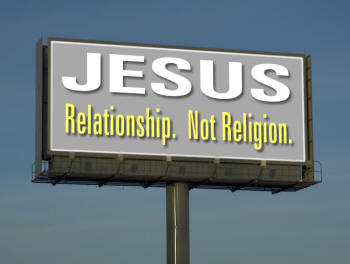
However, can the ornate exist without its foundations? Those who wish to be a temple unto themselves—meaning that they do not need a Church but just a personal relationship—heed St. Paul half-heartedly. They read "your body is a temple of the Holy Spirit" (1 Cor 6:19) but then, like children, listen to what they want to hear and ignore what else is told to them. Did they not recall that we are one Body (1 Cor 12:12)? And is this "Body" just of the spirit—that is to say a "spiritual Church"?

If so, who teaches you as a teacher? Who rebukes you? Are we all just equals before one another in all things by virtue of faith in Christ Jesus? What I mean is this: do you not see that if you reject the Church that you will inevitably make one of your own, either with others or of yourself. Was it vain that Paul said that some are prophets, administrators, and interpreters, while others should silent and speak at the appropriate time (cf. 1 Cor 12:26-40)? No. The structure of the living Church, then, lies in the Spirit and lies outside the spirit of mere belief. For did Paul intend that the living Church be a collection of those who merely believed—and that each would stand as equals in many matters just because of that faith?

More still, do you believe that our authority comes from Scripture alone or, rather, that the only authority to teach is Scripture? Indeed we must be obedient to the truth, but this sentiment is not obedience but pride. For by our own will we listen to Paul when he says "all Scripture is inspired by God [for many tasks]" (2 Tim 3:16) and take it to mean Scripture is the only source by which we have, by default, the gifts of teaching or interpretation. But "no prophecy came through human will but rather human beings moved by the Holy Spirit" (2 Pet 1:20). Are we so bold to claim that we are given all gifts by reading Scripture? Are we so bold to claim that the Spirit acts in those who only speak through Scripture? (Did not Satan also quote Scripture?)

The sentiments of this man, however good, are not Christianity but pride.

 Does not authority come from the Spirit? Yes, for Paul says that it is according to the will of the Spirit that each of us has particular gifts (cf. 1 Cor 12:4-11). They are distributed to many and individually so that we may heed one or another, not just by the utterance of Scripture but by the power of the Spirit in them.

We are ready, like trusting children, to imbibe quotes of Scripture as if it were milk. Yet when another rebukes us by virtue of reason, science, or his position of education we become more obstinate than the Jews in the desert. Is all they utter true? Of course not, but if the words are spoken by one who is gentle yet forceful, and is a man of proven character, why should we deny his rebukes? Below we shall explore this:

Since there is even more to write on this subject alone I will be brief. Read and contemplate these words which are connected to those above. Paul tells us plainly, "Let every person be subject to higher authorities for there is no authority except from God and those that exist have been established by God. Therefore; whoever resists authority opposes what God has appointed and those who oppose it bring judgment on themselves" (Rom 13:1-2). Obviously we should not consent to wicked rulers and wicked things, but how quick we are to call those whom we don't like wicked and against God! However, that God gave us leaders, rulers, and kings is not a lie. Furthermore, do you think that if God appointed kings and rulers to be judges in civil matters and instruments of His justice that He would not appoint men to be rulers and authorities in spiritual matters? "Respect those who are laboring among you and who are over you in the Lord and who admonish you, and … show esteem for them with special love on account of their work" (1 Thes 5:12-13).

And even if some are wicked, are they not still instruments?

They exist to serve you but also, by virtue of their leadership, see what is spiritually harmful for you. They stand atop a hill that is attacked from all sides, and are even attacked within.

King Josiah and the Apostles were praised for increasing the faith of countless people.

The Babylonians and Assyrians both prepared the hearts of the Jews for the Messiah by their bitter exile. By trial and tears the understanding of almighty God was purified from the pagan influence that has assailed those same Jews. Nero and the other Emperors, likewise, in their attempt to destroy the Church unwittingly caused it to flourish and spread to all corners of the earth.

Is every authority wicked? No, but even still we can judge who is a good or bad authority by the fruit of their labor. But remember that every authority is placed by God—all deserve their due (cf. Rom 13:7). Whether good or bad, that will be decided at the appointed time.

Subjecting ourselves to authority, then, takes humility. Deferring to your own reading of Scripture is easy, rejecting authority is even easier. Humility is a virtue we should work on and a grace which we should pray for unceasingly. Was it not humility that brought about conversion for Cornelius and his household? Was it not the humility of Peter who raised him up to equality and made him and his household coheirs to the Kingdom? (Acts 10:9-49)

And likewise Peter was warned, when he refused Christ's humility, that he would have no inheritance in Him?  But upon accepting it he was raised—no longer a servant but a friend, for Jesus revealed to him the model he should follow (cf. Jn 15:15).

Therefore, it is by humility of both those who have authority and those who are subject to authority that both are raised.
Humility brought Cornelius, a Roman, to Peter a Christian. By the love, patience, and humility of Peter he brought them to God. Peter a model of what broken humanity can achieve in Christ.

But for now, let us return to the first point but with another image:

Does not the fruit on a tree exist because of the branches? And the branches because of the trunk? And the trunk because of the roots and the soil? "The branch cannot bear fruit on its own unless it remains on the vine, so neither can you unless you remain in me" (Jn 15:4). Can we be fruit without the branches? A plant has many parts but it works to produce one fruit. The Church has many parts of varying importance but its one fruit is the salvation of souls—we are one Body, "give success to the work of our hands" (Ps 90:17).


And so I say again, do you hate hierarchy? Are you so quick to acknowledge the Master but not the laborers? Though the laborers are nothing without the Master the laborers do the work of the Master and share in His joy.

In this same way, did you build your own faith? "What do you posses that you have not received?  But if you received it, why are you boasting as if you did not receive it?" (1 Cor 4:7). Was it not given to you by others who were likewise convinced in the Power of God?

For we are not a Church of personal faiths, but a building being built upon in every generation—why else would Paul warn us to be careful as we build it? (cf. 1 Cor 3:10). What is your church built upon? Are they the Apostles, Tradition, the saints (wise men and women), the bishops in the line of the Apostles, and Scripture? If no, who leads you?
In reality, this is the pride that makes us accountable to no one but whom we choose. This has become its own false religion.

But truly, men are the ones who labor for God, building so as to support the faith of all. Like a master builder he needs to discern a solid foundation (Christ) and a solid design. Are we not the beneficiaries of such men? Do we give thanks to God for their labors? Ever worker deserves his wages. Deny the laborers in favor of the Master and you mock the laborers that the Master has picked.


Do these men—pillars, protectors, and laborers—not deserve honor for what they have given us? True, that those who ask for honor often deserve little, but the faithful servant who toiled to increase the Master's talents received an even greater honor by virtue of his work. Some more, others less.

In this respect do not neglect your leaders, your spiritual ones most of all. For neglecting them is to be as sheep who neglect their shepherd or plants that reject cultivation. Those neglectful ones produce little or nothing, become unruly, and lead themselves to ruin.

So think carefully and reflect deeply. Is Scripture or your personal relationship the only authority? Or does the Spirit select some to lead, others to interpret, some to teach, others with this or that virtue, and others to follow? Do you fear or hate authority? "Rulers are not a cause of fear to good conduct, but to evil … therefore it is necessary to be subject not only because of the wrath [against injustice] but also because of conscience [for the Lord has given you this authority]" (Rom 13:3, 5). And reflect, finally, that if your church does not acknowledge the Traditions we have been given by word of mouth and by script (cf. 2 Thes 2:15) nor does it have those who are above you in the Lord (1 Thes 5:12) then what church have you built? Can it stand?

For "the work of each will come to light, for the Day will disclose it. It will be revealed with fire, and the fire itself will test the quality of each one's work. … if the work is burned up, that one will suffer loss; the person will be saved, but only as through fire" (1 Cor 3:13, 15). Much is lost in a fire, will your church stand against the true Church?

Saturday, June 16, 2012

Early Christian Authors Worth Considering

Below is a brief list of some early Catholic authors that I believe are worth your attention. If you do wish to buy the books, I recommend the Ancient Christian Writers editions myself. Typically 17-28 dollars a book, I find their notes very helpful.

[A word of caution: ancient problems are not always our problems, so what they look at will not always address 1800 years of advancements]

1)Clement of Rome to the Corinthians--
A book almost accepted as Scripture by the early Church, it is one of the most produced non-biblical manuscripts dating to slightly after St. Paul in about 80-85AD. The head bishop of Rome, already in this book we see the trend of abuses and questions of conduct being sent to Rome or addressed by Rome. The abuse here in a phrase was that young members of the assembly ousted the older priests and instituted themselves as priests of that community.
Clement corrected the abuses in Corinth with this (and his 2nd) letter and strengthened the precedent of Rome being involved in other affairs. The history is not always clean, but it is also important to note that the "martyrology" played a big role in cities. If an Apostle or great saint was martyred in your city it was a sign of authority (because they taught there) and a belief that that saint was one who prayed and watched over that city. In this case Rome was where Peter and Paul were martyred, something respected widely in the early Church.
Pope St. Clement I, a "principal" figure who had to call the Corinthians to his office in one of the most famous non-canon letters of all time.

2) Ignatius of Antioch
Already an old man when he wrote (maybe 70) he wrote to various cities as he himself was instructed by St. John and a friend of his. John died around 100-105AD (aged, perhaps, 89-95). He defended the Church and, as you can see in my signature, was the first to utter the word "catholic" to describe the Church. Now I've attended the services of other denominations who have "one, holy, catholic (Christian), church." It may be worth reflecting on the man who used this word first and how it was used. As you can see from my quote it's different than you might expect. He was taken from his home where he presided in Antioch and was fed to lions in Rome at what was believed to be the Flavian Amphitheater.
“I am the wheat of God. Let me be ground by the teeth of the wild beasts, that I may be found the pure bread of Christ.”
3) Origen
Prominent early theologian who shaped much of biblical interpretation and was also a brilliant scholar in many fields. He wanted to die of martyrdom (you read this in "Subtle Crosses"). He was not sainted because some of his theology became suspect. An early example of a great mind in the Church who was lauded and used, but whose own personal piety was particularly severe. Though not proven, it was rumored that he took the Scriptures "if it causes you to sin cut it off" and, as such, he castrated himself. Not sure if that's true, but he was a very severe ascetic who had a profound influence.

His expert learning was also an occasion for him to write elaborate commentaries on Scripture in an attempt to blend and synthesize Scripture in its literal (the truths being expressed), moral (how we apply it), and allegorical senses (truths derived from Scripture as they are found in events, history, and geography--but my explanation fails to capture it exactly).

Also worth noting is that Origen pioneered the posture many philosophy and theology students would adopt for centuries after.

4) Eusebius (I will probably write on him later)

2nd-3rd century father who was the first Church historian who made a comprehensive history of Jewish patriarchs to Christ, the Apostles, and the bishops they ordained.

Somewhat dry but somewhat like the James Monroe of the Church who wrote a sort of "Federalist Papers" in that he charted how the canon of Scripture was decided upon and why and many other early traditions and their origins in Scripture and the teachings of the Apostles.

Not the easiest read, but I'm slowly getting through him myself.
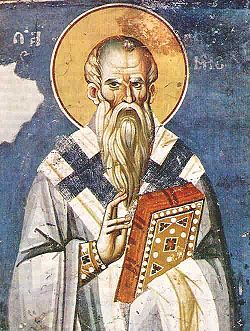
He's about as exciting as he looks in this picture, but it doesn't detract from his invaluable research, learning, or importance in understanding the early Church


I hope this inspired someone to pick one of these men (and there are plenty others) up.

M