Wednesday, September 26, 2012

Seminary Appeal Talk

This is a slightly edited representation of my address to Our Lady of Victory parish this past Sunday (September 23rd). The readings for that day may be found here.

Seminary Appeal Talk

I would like to talk about vocations, specifically the vocation to the priesthood. We can see from the many different people gathered here that God has called us to married life and single life. Likewise, many of you have a great number of occupations that you were drawn to as well. But God also calls young men to consider the priesthood as his calling in life. The call to the priesthood and a unique life of service is given a special prominence in the Gospels and New Testament as a whole. All are called to conversion but only a select few are called to serve as Christ for the sake of His people.

The Apostles are a prime example of this call. Jesus Christ entered into their lives—He sought them out—and commanded them to follow. The Apostles are a group of different men and it is worthwhile, I think, to look at their responses.

Peter was a fisherman, and when Christ entered into His life Peter fell on his knees and said “Leave me Lord for I am a sinful man” to which Jesus simply responded “Be not afraid; from now on you will be catching men” (see: Lk 5:1-11). After this Peter left all he had and followed Him. 
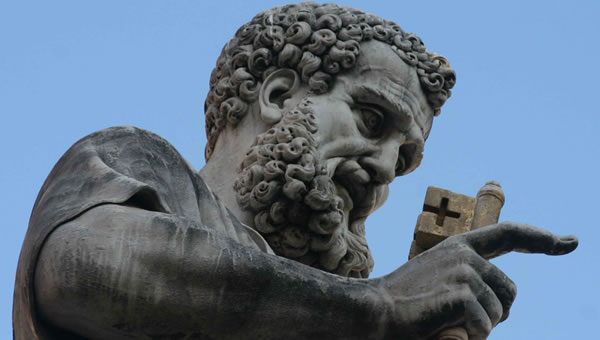
Peter: a man of great courage but one of many faults and weaknesses. But he was able to acknowledge those weaknesses and through Christ was set apart as an example of forgiveness (because he was forgiven) and leadership (his teaching and martyrdom)

James and John were likewise fisherman and when they heard the call of Christ they left all they had and readily followed Him. The call of St. Matthew too had different circumstances as well. Matthew, whom we celebrated on September 21st, was a tax collector. He was regarded as a traitor and an outcast for the Jews and perhaps hated by even his own family. It was possible that he embezzled money, but at the very least he was employed by the Roman Empire. Yet when Jesus came into his life he left his own way of life behind and followed Jesus without hesitation.
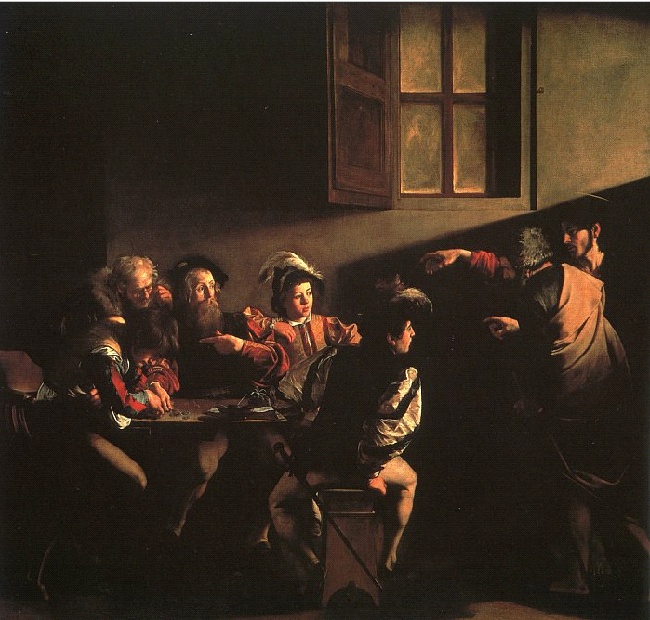
Matthew: surprised that Jesus, a Jew, might call for him to be his disciple, he converted and immediately drew tax collectors and sinners to share in the same joy Christ gave him.

I believe we can all say that our lives are similar to the Apostles. We have felt Jesus come into our lives in some manner and lead us to where we are today. He searches us out and calls us to Him. In the seminary, in my own class, we have men who were laborers, ex-military, farmers, teachers, lawyers, and seminarians like myself. We can see that like the Apostles God isn't picky with whom he calls—in fact we're fortunate His call reaches ever corner and every life.

As such, I would like to speak to my own experience, in brief, in hopes that it encourages you to listen for God's whispers in your life.

I first began thinking about the priesthood in 5th grade. We had recently received a new pastor and it was a day like any other. At the words of consecration and the raising of the host I remember I said to myself, “Maybe I could do that.”

And that was it. Is wasn't earth-shattering or overpowering, just a subtle feeling and an inclination. But I didn't fight it nor did I dismiss it. Rather, I accepted it and simply lived my life after that. I was encouraged by that same priest to consider the priesthood and so I did.

When I went into 8th grade I was still on the fence, but the concern was more academic. Eventually, however, I noticed that I was happier at Archbishop Quigley Preparatory Seminary and chose it. I'm happy to say it was probably the best decision of my life. The opportunity to be taught by priests and laymen and women was an excellent one. They not only taught us the necessities a student needed in subjects such as literature, history, language, theology, and science but each teacher had an appreciation for the Catholic tradition and instilled in me a real love of our Catholic heritage.

Time went on and I joined the college seminary. Now, at that point I was still riddled with old habits and dispositions, many of them bad, and likewise I had yet to mature into a priestly identity that I had taken for granted. At the same time I was still 18 years old and growing—I'm grateful that I had the opportunity to grow in the seminary with authentic and attentive human formation. I was there for two years before I went for 3 (blessed) years in Washington DC. Though much happened at St. Joseph's and DC I will share with you one experience of prayer that has given me an image of priesthood that I still consider and follow today.

I was praying at a 24-hour adoration, perhaps it was 11, 12, or 1 in the morning. I recall the image came to my mind almost like a dream:

I was standing above a large crowd and as I looked down everything was gray. People were walking back and forth, much like what you would see downtown on Michigan Avenue. Each of them, however, had their heads down. Some were scared, others crying, others anxious, while others still seemed indifferent or apathetic. I recall looking on them with a great deal of sadness and compassion. Just then a hand was placed on my shoulder that said, “My son, do you see my children down there, crying and broken? Who will go and comfort them? Who will be with them?” Without any real hesitation I remember that I turned around and said, “Please, Lord, send me.”

This is an image I've kept with myself for some time now and one that informs my image of the priesthood. I realize it can seem rather dire and serious and at the time it did seem this way to me. As with many things in life, however, what seems one way at first grows with us over time. Now there have been numerous instances where this has been a great source of joy and reflection for me. Not every person who is worried or afraid is depressed, rather they are looking for God at pivotal moments in their life. There are parents who wonder if they can raise their family right, there are married couples who wonder if they'll make ends meet, and there are those who are alone in the hospital who feel abandoned. A priest is with these people at their most important stages as a living image of Christ. I don't mean in the sense that I or a priest replaces God, but a priest is one who is sent to minister to His people. The job of the priest is to listen, to guide, to teach, and help those he meets go to the Father, just as Christ did.

I believe that the Gospel is also helpful in this case (Mk 9:30-37). In the seminary, even though I'm 24 years old, my friends and I are still guys. We're competitive, at times confrontational, and enjoy hanging out (with the idle talk that comes with it). Here we have the Apostles acting like guys. They have already experienced Christ and listened to them. They have been taught be Him and they are already following Him and yet “they were arguing among themselves who was the greatest.” Jesus responds in a surprising way, however. He places a child in their midst and says “Who ever among you wishes to be great must make himself as this little child.”
The reaction on the Apostles face indicates, I think, the difficulty and puzzling nature of Christ's command for them and His insistence that this would be "greatness" before God.

Now, at this time period in time a child was considered as completely dependent, helpless, and as someone generally disregarded. A child was someone who could never hope to repay someone back but needed your help all the time. It was a lowly life. But what an image for a holy priesthood! It's a powerful image to think that what I and other men are called to is in the likeness of a little child. What this means is that a priest must constantly humble himself, both because he is called by and led by God to do his work but also because of the great responsibility of leading others while expecting nothing in return. A priest is a sower of the Word and a shepherd to the people, but not everyone will hear nor will every sheep remain. But it is His task to be at the total service of his people, which are in reality His people. Without child-like trust and humility we would never listen to God, and without child-like concern and love we would never be attentive to the people who need us most.
What I've learned over the course of time is that God does not call those of us who are the best speakers, the greatest intellects, the most pious, the most athletic, nor the most skillful—necessarily. Rather He calls those whom he sets apart for a special task and for some that special task is a priest of Jesus Christ. For indeed “before I formed you in the womb I knew you [and] before you were born I dedicated you” (Jer 1:5a). God calls those from families who have perhaps fallen away from Him to act as a voice that calls them back. He calls those from broken families, common jobs, and who live simply. He calls those who come from loving homes, highly trained, and from affluent areas. All of them are called to serve and give what has been given to them.


In conclusion I would ask all of you to rededicate yourselves to encourage young men to the holy priesthood of Christ. In the same way I encourage you to affirm young women to consecrated life and religious life (guys too). When you see in someone qualities that you want in the priesthood you should affirm it. My vocation began in part because my pastor said to me 'I think you should think about the priesthood.' Our voice can be an instrument of God that leads young men and women to discover what God wants from them. They can certainly deny your words or discover that religious and/or priestly life isn't for them but as the people of God we must recognize in those who we raise the qualities of a good spiritual father and good shepherds. Are we courageous enough to speak when we see these qualities in our brothers, our sons, our nephews, and our friends?

I ask humbly that you continue to pray for me as I discern God's call in this my 11th year of formation. You know, many of you, my past and with it my weaknesses, habits, faults, and failings. I ask you pray that I persevere while also humbling myself always to be molded and formed in Christ Jesus in order that I become the man that God wants me to be for His people. Please pray for my fellow brothers who are doing the same.

Pray especially that we all, especially young men, are attentive to the call God has placed in their hearts. I thank you for the encouragement and nourishment that you have already given me in abundance.

Thank you,

Matthew

Friday, August 31, 2012

On Reading Scripture: the Beginning

Note before reading:

I wrote this while on my silent retreat. I read the book of Isaiah (most of it--still working) this time. Last year I read Jeremiah during the silence. I don't know why but I find myself ever more drawn to the prophets. Likewise I find myself drawn to Wisdom Literature in the Old Testament. Much like my experience with philosophy where I would revel in the newer, more contemporary philosophers until I became a confused mess, I think the same can be true of the New Testament.

Just as I turned to ancient philosophy to get my bearings--to know from where I'd come--I looked to the prophets who await the fullness of Christ in the same way (but differently) we await the fullness of His presence. So I found myself drawn to them and their admonitions, reading into them the plight, arrogance, trials, and troubles of my own soul.

I wrote this as a way of inspiring you to read but this time also endeavoring to seek instruction from a number of sources, the prophets being primary candidates.

I'm aware that some of this may be nothing more than my 'preaching to the choir' as it were. But even for myself, and I consider myself devout, we can miss out on simple things very easily.

Please leave a comment, I always love reading them!


______________________________


Often when I read discussions, arguments, or biblical-based critiques/attacks of my theology I find that there is both a sad simplification and, at times, an ignorance of Scripture. Many of us, especially Christians, would like to disagree that we are members of this category but the reality is that all the zeal and good (or bad) intention in the world doesn't translate to wisdom (let alone an understanding of Scripture). In order to remedy this situation I would like to offer some ideas on reading Scripture more effectively and some pitfalls to avoid in the process.

Reading Scripture can seem like a daunting task—many aren't sure where to begin or try to muscle their way through right from the beginning. This isn't a bad approach but we can get weighed down in a sea of details. Keep reading and I'll try and put it in a different light.

Many people make comments about a number of subjects while using Scripture such as gay marriage, abortion, sex outside of marriage—and the list goes on. Consequently there are those people who are obviously in the wrong. These are people who curse, hate, ridicule, and belittle. Scripture has already judged these people so we need not concern ourselves with them or that subject. What we do need to focus on are those on either side who establish their argument by claiming that "Jesus says that we should love one another!" or "Judge not lest you be judged!" Far be it from me to call the statement wrong but we are all aware that we can say one thing and mean a number of things.

For example:

1) "I love her" (her = her personality, her body, her presence, her person).

2) "I am saved" (...right now, ...later, ...when I have faith)


"Judgment" and "love" are no different. Everyone uses the words but few consider the meaning. Fewer consider the source where we are drawing that meaning from. I will expand on this in another piece but Scripture conveys many meanings. We can convey just as many about Scripture—only we can be very, very wrong in the process.

Jesus says "Love God with all your heart, soul, and mind. This is the greatest and first commandment. The second is like it: You shall love your neighbor as yourself. The whole law and the prophets depend on these two commandments" (Mt 22:37-40).

In a society and mindset where we want the quick and easy method it seems that we should be content with this passage. Indeed, it seems many people are content with just hearing this passage. They nod their heads and continue on as if nothing has changed and nothing is different.

But listen now and pay close attention: is a building called a building by its foundations alone? Are not all the parts of a house considered together? Indeed, even Paul warns us that "each must be careful how he builds upon it [the foundation]" (1 Cor 3:10). More still that foundation will be revealed for what it is. What we build may be weak and crumble under the weight of practical incompetence, ignorance, pride, laziness, and more. "If the work stands that someone built upon the foundation [Christ] he will receive a wage. But if someone's work is burned up, that one will suffer loss; the person will be saved, but only as through fire." (1 Cor 3:14-15). Sure, you could build poorly—but when you "build" poorly you may also mistake the foundation for Christ when it's not really Him at all. If you can (or should) build, build wisely.

What is this building process, then? For our purposes let's call it our role as evangelizers. When we argue weakly from Scripture we still argue weakly. This is not a case of us "being fools for Christ." We will be called fools for speaking the Truth, but we will also be called fools for speaking wrongly—discerning which is which is the key.

Christ gives us a starting point: Love God and love your neighbor are the foundation of the law and the prophets. But how can we put Christ's hint to good use if we fail to read Scripture, especially the Old Testament—the law and the prophets?

You should make an effort today to read, but when you read Scripture don't be intimidated. I've found that the following holds true in my reading: if Scripture is the wisdom of God speaking to us then we must endeavor to gain wisdom. Indeed, many will hear but not listen and many will see but will not understand (cf., Is 6:9, Mt 13:14-15). Wisdom is the light by which we see truth. But sometimes we need help to see the truth—we need to be taught wisdom.

"Plans fail when there is no counsel, but they succeed when counselors are many" (Proverbs 15:22). Likewise "Listen to counsel and receive instruction that you may eventually become wise" (19:20). Who are our counselors and instructors? First, the prophets. Men who were inspired by the Spirit and who longed for Christ as much as we should long for Him. The letter of James states that "the fervent prayer of the righteous person is very powerful" (James 5:16) and so too is the counsel of those who are prayerful and loving. We have already been taught about love from St. Paul: it is patient, without malice, and kind. Seek these people out and seek their advice when darkness covers your own heart. For "like golden apples in silver settings are words spoken at the proper time" (Prv 25:11). "A word in season, how good it is!" (15:23).

When I am stuck on Scripture it is sometimes a matter of academic ignorance. But in the same way I need instruction from those who are wise. The wise rabbis and scribes compiled these books for us called "Wisdom Literature."  They consist of Job, the Psalms, Proverbs, Ecclesiastes, the Song of Songs, Wisdom, and Sirach.  If you were to begin anywhere in Scripture (and are unsure where to begin) I would look to Proverbs, Wisdom, and Sirach. These three books contain easy-to-digest phrases and speech but also offer a mature reflection on the whole of Scripture (i.e., the law, the prophets, and the wisdom of many generations).

Though a bit simple, I consider Proverbs part of the oral-wisdom of the Jews. Sayings passed down and collected over the ages. The book of wisdom is like this as well but offers some more mature reflections and invokes king Solomon. The book of Sirach (originally written in Hebrew but only surviving to us in Greek) was written by an Jerusalem Jew, translated by his grandson, an Alexandrian Jew. It is a collection of wisdom and instruction written about 200-175BC. It is the mature musings of a man who grew up loving the law and lived it his whole life. These three books have offered me a great deal of insight and reflection on the entirety of Scripture. Seek out their wisdom and reflect on their words.

The other Wisdom books are excellent sources but much more difficult. St. Bernard of Clairvaux wrote extensively on the Song of Songs, even though the book itself is about 7 pages (he wrote somewhere around 30 long-essays on it and he never finished) and Job itself is a book that should be revisited often. But if you want my advice, start with the easier books.

Wisdom is for all ages. Some are ready for solid food but many more of us must be fed with milk first.


And so I return to my earlier point. Christ tells us that the law and the prophets depend on love. The Apostles and Paul affirmed and upheld this. But when we neglect the prophets we will mourn like those who neglected the prophets in ages past. The prophets warned about false gods, idols, and foreign nations. Do we not also sacrifice to false gods when we love money, power, and things over God and others? Do we not raise idols for ourselves when disdain the chastisements of the wise and instead boast of our own virtue? And are not the foreign nations nothing more than the allure, power, and (in the end) the destructive tendency of sin? When we stop seeing the prophets and the law as merely 'that which has passed' and more as a relevant warning for our souls right now we are all the better. Christ said to stay awake. Peter said 'stay sober and alert.' The devil is indeed like a prowling lion, looking for someone to devour.

"When one turns away his ear from hearing the law, even his prayer is an abomination" (Prv 28:9).

If you want to speak in Jesus' name but do not heed His words as best you can what are you building? Are you building the Kingdom of God or is your work destined for the fire? 'If they will not heed the prophets neither will they heed one who has risen from the dead.' I will address the wisdom of the prophets, primarily Isaiah, Jeremiah, and Ezekiel at a later date. What I will do is set Jerusalem our very souls and not just the city of past ages. I think some very interesting insights arise from making the temple—which is the height and center of Jerusalem—and the city our very own being. For is not our body a "temple of the Holy Spirit"?

And so, when we speak about Scripture and about Christian living are we speaking from the perspective of one who sought counsel or from the perspective of one who simply claims he 'loves God and neighbor'? It is very easy to say we love both, but it is far more difficult to seek others who tell us that we're doing it wrong. These counselors can be Scripture, those who have died, or those still living. This is true because "he who rejects admonition despises his own soul, but he who heeds reproof gains understanding" (Prv 15:32).  "Reprove a wise man and he will love you" (9:8b).

Do not blind or deaf to instruction nor be weighed down. My words may seem harsh but only because "evil is cleansed away by bloody lashes, and a scourging to the inmost being" (Prv 20:30). My goal is not to beat you into submission but to warn you sternly about the great task before you. If you are to make God known to the world it would benefit you to make His Word known to yourself—not as one who claims he knows that word. Do not be this person too readily. Rather, seek wisdom. Seek it in Scripture and in the world where God resides. For the Spirit inspires both word and man. God gives us both.

"All wisdom is fear of the Lord; perfect wisdom is fulfillment of the law. The knowledge of wickedness is not wisdom, nor is there prudence in the council of sinners" (Sirach 19:17-18). Do not be quick to declare another a sinner nor be too quick to ignore a man's words. Every man is known by his fruit. "Do people pick grapes from thorn-bushes, or figs from thistles? Just so … a good tree cannot bear bad fruit nor a rotten tree bear good fruit" (Mt 7:16-18). And so if there seems to be merit in the man there may be merit in his words. It is good and wise to trust Scripture and it is good and wise to trust those who live according to Scripture—but how we determine this is also for another time.

If you have questions or want some suggestions please feel free to ask. There is much to say (on my part) and hardly time to record it all. Remember to pray to the Holy Spirit for guidance and if you find yourself drawn to a certain book in Scripture (for this or that reason) read that book! God is inspiring your heart to read something and it benefits you to trust that instinct.

I hope this is a good start! We'll continue with the prophets next time.