Showing posts with label vocation. Show all posts

Tuesday, March 11, 2014

My Desire for Marriage

(Note: I've made some major revisions to this piece, mostly attempting to add clarity to my message and fixing up some diction. ~M, 3/15/2014)

As I approach ordination to the Diaconate after 12 years in the seminary it's easy to think about the many “what ifs” in my life. Things such as career, money, jobs, a wife, children, and even a permanent home are things I've given up in pursuit of this call. A call, however, is both something desirable and undesirable. When it comes to vocations I call to mind that “when you were young, you fastened your own belt and walked where you would; but when you are old, you will stretch out your hands, and another will fasten your belt for you and carry you where you do not wish to go” (Jn 21:18). Any walk of life requires sacrifice and any vocation, in my view, goes against the grain of our desires.

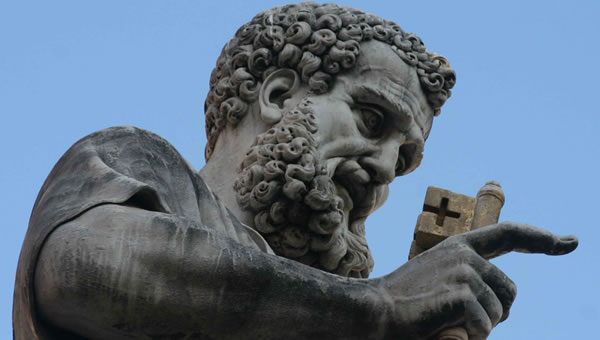
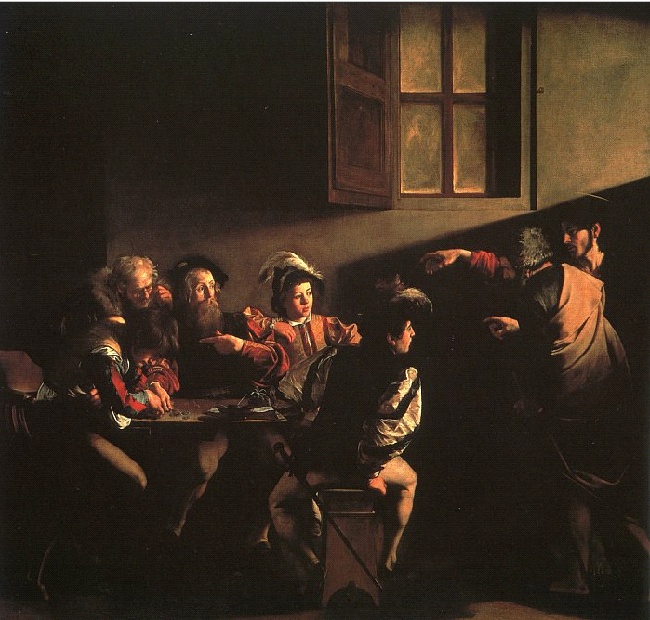
While the Apostle Matthew was called, “rose and followed him” (Mt 9:9), this is not true of all followers. Calls demand a response, not necessarily a wholehearted desire for the content of that call. Peter himself said, “Depart from me, for I am a sinful man, O Lord” (Lk 5:8). Isaiah lamented, “Woe is me! For I am lost; for I am a man of unclean lip in the midst of a people of unclean lips” (Is 6:5a). Jeremiah complained, “Ah, Lord God! Behold, I do not know how to speak, for I am only a youth!” (Jer 1:6). All types of people are represented in Scripture. The overwhelming majority are those who aren't too keen to do what God has asked of them—it's not bad to see ourselves in them.
As Matthew's expression illustrates, "How could you choose me?"

The Lord responds to our response. “Do not be afraid” (Lk 5:10). “Whom shall I send?” (Is 6:8). “To all to whom I send you you shall go, and whatever I command you to speak I shall speak” (Jer 1:7). The formula of God's call is uniform: He reassures us and says, “Do I send whom I have not chosen?” (cf., Is 42:1). This is true because “it was not you who chose me, but I who chose you” (Jn 15:16). Then he tells us rather bluntly, “You will do as I command” (cf., Dt 12:32). We must confront the reality that life is not what I want but what God wants in His time and in His way. Prayer sharpens our hearing, but it is time, grace, and the Church that makes us desire His will as if it were our own.

The call is, for some, a process of constant humiliation, disappointment, frustration, and difficulties. Yet, “Await God's patience, cling to him to do not depart, that you may be wise in all your ways. Accept whatever is brought upon you, and endure it in sorrow; in changes that humble you be patient. For gold and silver are tested in the fire, and acceptable men in the furnace of humiliation” (Sir 2:3-5).


I know what awaits me from others moving forward: disrespect, hatred, dismissive attitudes, and many other things. I know that in my own heart there is a fear of timidness, complacency, and apathy. Yet God has cared for me with those who love me. He has cared for my heart by giving me peace, courage, faith, and hope. I've come to find that all things in me are good but not fulfilled. No one can fulfill himself and love is never fulfilled except from outside of myself. This is His gift to me: the love of God and neighbor is my own fulfillment.


Having given up everything to follow Him I approach a new chapter in my life: sacrificing personal desire for the sake of those sheep whom Christ said to feed and shepherd. I will soon experience this call and experience it with the people of God, and there are many trials and many blessings herein.

As I prayed about these things in my heart I called to mind the couples that I will marry. I called to mind that they too are called and respond as all men do to God's call. I thought of my friends with children and the unique opportunity that having children offers in your life, but I also considered the many trials they will experience. In a life that is, by necessity, “focused on the things of this world” (cf. 1 Cor 7:33-34). What hope is there for a married couple and, I thought, what could I say to them to take the concrete experiences of their life and see God?

This, then, is my desire for marriage: that couples reflect on the fact that their relationship truly reflects the Divine Life and to keep this close to their heart throughout their own trials.

Only parents can experience God as a parent. Reflect that God calls us sons and daughters, too. A child comes forth in pain, crying, but it is met with love. The child is needy, depriving sleep from one's eyes and peace from one's mind, yet it is loved because it is life and the “fruit of my body” (cf., Dt 28:4). Throughout his or her life, their suffering is your suffering, their anxieties are your anxieties, and their joy is your joy. When they are sick you heal them. When they are scared they run to you. When they are arrogant they turn from you. When they are bad they anger you. When they are away they sadden you. Through it all these emotions are intensified because of the love with which you first loved them.

Your spouse, the one whom you love, was a co-creator and cooperator in your own love. You share life and you share hardships, even if each one bears it unevenly. Your love changes you and it is completed by being received and then returned. This too is the life of grace. This is a life of faith in as concrete a manner as one can experience it. This is the God of the Old Testament and New in as intimate, reasonable, and accessible way as one can approach it.

Any child becomes a sign of God's covenant with His people. Know that your feelings for your child are merely a fraction of what God feels for you. Yet despite your child's suffering that result from his wickedness, from misfortune, or persecution your love for him remains undaunted. If a mother or father's love can endure evil and even death, how much more does God's love endure through our sins and the sins of of the world!

Jesus promises that “his burden is easy” and his yoke light (Mt 11:30). Life has shown us that it is not easy. “Much labor was created for every man, and a heavy yoke is upon the sons of Adam” (Sir 40:1). Christ said this, however, because not only is this life of imitating God possible, it is peace for the soul. For “when a woman is in labor, she has pain because her hour has come; but when she is delivered of the child, she no longer remembers the anguish, for joy that a child is born into the world” (Jn 16:21). This is love God shows to those who return to Him, love and peace we all have access to.

Life for both of us, ordained or married, is a unique call from the others. It is indeed a life of responsibility unlike any other. This is a gift given to us, even if it doesn't always seem good or desirable. All life is a gift, no matter the type, since we are all pilgrims on one path—may our feet not stray! We have all been called.


His response is simple: Be not afraid, follow me.
Let it happen to me according to your word.

Monday, May 6, 2013

Teach Them to Hear His Voice

This was a reflection I gave at all Sunday masses. As part of my training in seminary we are asked to preach, usually at daily masses. We all have one Sunday mass where we preach and are evaluated by both parishioners (selected ahead of time) and the priests. This received good marks, so I hope you find it useful. The readings may be found here, and because of this I didn't cite my quotations.


6th Sunday of Easter

“Unless you are circumcised according to the Mosaic practice, you cannot be saved.” For some these words represent a hardheadedness or desire of some to control the lives of others. I would rather have you believe that these men had all the right intentions. These were Jewish converts to Christianity and taught that the law of Moses is what leads to Christ. In their minds, having all people follow the law of Moses was not only necessary, but it was the best way to live.

As is the case with so many things in life, what we believe to be the best and proper disposition may in fact be the most burdensome. We devote a great deal of our time to planning and working out many things to our advantage. Dedicating ourselves to our work and providing for ourselves and those we love are important. We say things such as “I want to do my best” and “I want what's best for my children.”

At the same time, in the few quiet moments we're given, have you asked yourself “What does God want for me?”

The Apostles responded to their brothers and to the whole Church: “It is the decision of the Holy Spirit and of us not to place on you any burden beyond [the] necessities [we all share]” (cf. Acts 15:28).

The Apostles give a pronouncement that is sound advice up to this very day: do nothing that impedes the will of the Lord God. My brothers and sisters, while certainly our sins block out the words of Christ in the world, even our good intentions and motives can do the same. Like these men who urged others to follow the Mosaic Law, we also say “When I do this....” or “When he or she does that” then they will be happy.

As parents, allow your children to hear God's voice; teach them to hear His voice. He does not always speak in a thunderclap but many times He speaks in a quiet whisper.

His voice is simple and his call is clear: “Follow me. Take up your cross and follow me.” The cross is not only the struggles we face in life but also the task that he has appointed to each and every one of us.

Parents, teachers, and adults: if you see the qualities of priesthood or religious life in young men acknowledge it, for you may be the voice of God speaking to their hearts. If you see the qualities of religious life in young women, acknowledge it, for they yearn in their hearts to serve God.

All of us, whether married or single, are called to spiritual fatherhood and motherhood. No priest, brother, or sister is without children and the Lord provides abundantly for them.

Therefore, do not be troubled, for Christ says, “Peace I leave with you; my peace I give to you. Not as the world gives do I give it to you.” The peace and security we promise on our own is a raging storm compared to the tranquility Christ promises. Indeed, “not as the world gives” does Christ give peace to us.

Do not be afraid, troubled or hesitant if a child or someone you know seeks priesthood or religious life. This is a blessing, and there is no greater peace or security than discerning God's will at a young age. God forms each of us during our lives so that we become the person he wants us to be.

There are those who do not listen to His voice. For some, it is because the Word was never spoken. For others, they never listened.

Jesus says in our gospel today, “Whoever loves me will keep my word, and my Father will love him, and we will come to him and make our dwelling with him.”

How can we keep His word, my brothers and sisters, if we do not listen or call others to listen? His word is found here, at the holy mass, and proceeds out to the world from its source, the Eucharist.

But if we keep His word, responding to it little by little, the Father will love us with that same intense love that He loves Christ with for all eternity. In that growing love the Spirit dwells in us—our bodies become a temple.

When we receive the Eucharist we should not only place him in our mouths but also place Him in the tabernacle of our hearts. We then carry a place of repose in us and here we find strength for the task appointed to us. Return to Him and He will speak to you.

The Eucharist is Jesus Christ, the Word made flesh. Listen to Jesus and let the Word remain in you. As the Psalm says, “So may your way be known upon earth; among all nations, your salvation.” We, everyone gathered here, are called to make His way known to all nations. It begins in our hearts and in our homes, opening them both to Him: “Lord, let your face shine upon us!”

Saturday, November 17, 2012

The Mediation of the Saints (2): God Works through Us

Note: You can see part 1 here (Mediation of the Saints Part 1)
Part 3 posted now as well!  (Part 3: Walking Together)

This was actually twice as long and I split this up into two parts. The good news is that the next part is done. The bad news is that this may be disjointed. I'm going to come back to this tomorrow and see if I need to edit anything (such as make additions).

Please leave your comments and questions below. It's not finished, so I realize that some of you may not want to render judgment just yet, but a heads-up to potential problems makes for a better process. Thanks again!


II. God Works through His People

Last time we said that the saints, in accord with the letter of James, were exemplary “doers of the word” (James 1:22). They not only stand before us as a model but a living voice in every age calling each of us to conversion. In the previous section we saw that the Apostles, filled with the Spirit, attracted a great number to them. Some take delight in having others flock to them and hang on their every word. A saint, however, does as John the Baptist did: he pointed to Christ.

A saint, in his perfect humility, does all his work for the sake of Jesus Christ and His mission which is the salvation of the whole world. I also claimed last time that seeking their intercession was not an act of disobedience to Christ but an act of personal humility for Christ. We, weak as we often are, ask for the prayers of men and women who know how to ask more perfectly. Indeed, James tells us that “you ask but do not receive, because you ask wrongly, to spend it on your passions” (James 4:3).

Below we shall examine this truth: God uses us and the whole world in order to call us to Himself.
Some have argued that asking for the aid of the saints is to put a sort of “middle man” in between God and the person. This argument, which takes many forms, seems to me to be ignorant of Scripture as well as the process of salvation.

God employs harvesters and fishers of men to do his work. He gives those who are faithful in small matters even greater responsibility (cf. Mt 25:14-30).

But God's will and action are not limited to his own word or his hands. It pleased God to use intermediaries to effect his designs such as the prophets, the Apostles, the angels, and his saints. God also used the wicked and the deformed to effect his will. He did not use them as a puppeteer but rather allowed their wickedness to bring about an inevitable good. God used the Assyrians and Babylonians to convert Israel back to Him:

Who was it that gave Jacob to be plundered, Israel to the despoilers [the Assyrians]? Was it not the Lord, against whom we have sinned? In his ways they refused to walk, his law they disobeyed. So he poured out wrath upon them, his anger, and the fury of battle; It blazed round about them, yet they did not realize, it burned them, but they took it not to heart. (Is 42:24-25, italics added for emphasis).
Their houses will fall to strangers [the Babylonians], their fields and their wives as well; For I will stretch forth my hand against those who dwell in this land, says the Lord” (Jer 6:12) (cf., Jer 27:2-6).
The prophet Jeremiah. Hated among his peers and countrymen. Laughed at, scorned, and threatened his whole life he proclaimed God's word. Other prophets and believers tried to silence him and offer a different message. He is a reminder to us that those whom we dislike, hate, or consider as 'less faithful' (or whatever suits us) may in fact be a clearer display of God's message than we care to say. The man who speaks out against evil despite the consequences is a man of God. Jeremiah was a true man of God, despite his pitiable appearance and difficult life.

We see that God uses and allows our desires to aid us or harm us. The prophet Hosea proclaims that God “will hedge in her way with thorns and erect a wall against her, so that she cannot find her paths. If she runs after her lovers, she shall not overtake them; if she looks for them she shall not find them. Then she shall say, "I will go back to my first husband, for it was better with me then than now." So I will allure her; I will lead her into the desert and speak to her heart” (Hos 2:8-9, 16).

Look closely at this passage and reflect deeply on these words. The thorns He erects are for paths that lead to false gods and immorality. These paths are none other than our malformed choices and desires. The destination we all seek, however, is happiness. She runs “after her lovers” which is happiness gained through immorality and false worship. She “searches but shall not find” means that those who look for happiness outside of God (i.e., in these errant ways) will not find it. This is not to say that we do not have things that make us happy. But we invariably fool ourselves when we think finite and temporary things will give us lasting pleasure. Pleasure gives way to pain. Moreover attachment to anything, good or bad, will be counted as a loss to us. It will return to dust regardless of our actions. True happiness is found in the true God. The path that leads to Him will have what we need to get to Him—it does not exclude loved ones, pleasure, or happiness but it is ordered to God and God alone. When God leads her “into the desert” this means that our hearts, when they recognize that nothing else will last except God we will realize He is the sum of all our desires and we will seek Him in all we do and do His will. So many want to have “God and...” and end up with nothing. Wisdom dictates that when we have “God alone...” we gain everything, even what we thought was lost. When we believe we are building paths to God through our desires we are often constructing cages and walls that keep us from Him. The prophets are all of one voice saying “What must we lose to gain?”
The prophet Hosea was told to take a wife for himself. She was a known prostitute who committed many infidelities. God told Hosea that this was how Israel had treated Him. All the same, God commanded that he love her and take her back because the love of God and deeper and more powerful than any infidelity. God could not show us this striking image, however, unless Hosea loved and trusted God enough to do as he was asked.

This passage from Hosea is only one example that explains how God works with us and through us whether we are conscious of it or not. Some, however, believe that this interaction of God in our lives (i.e., “grace”) is irresistible and unavoidable. The believe that God will use anyone and we just happen to be lucky if we're on the right side of the battle. I propose to show how that isn't true.

Next time we will look at how God interacted with the prophets and how the prophets worked with God. We shall see how the prophets were men of all walks of life who were given a special mission and a unique grace to feel what God feels and speak with Him openly.

Wednesday, September 26, 2012

Seminary Appeal Talk

This is a slightly edited representation of my address to Our Lady of Victory parish this past Sunday (September 23rd). The readings for that day may be found here.

Seminary Appeal Talk

I would like to talk about vocations, specifically the vocation to the priesthood. We can see from the many different people gathered here that God has called us to married life and single life. Likewise, many of you have a great number of occupations that you were drawn to as well. But God also calls young men to consider the priesthood as his calling in life. The call to the priesthood and a unique life of service is given a special prominence in the Gospels and New Testament as a whole. All are called to conversion but only a select few are called to serve as Christ for the sake of His people.

The Apostles are a prime example of this call. Jesus Christ entered into their lives—He sought them out—and commanded them to follow. The Apostles are a group of different men and it is worthwhile, I think, to look at their responses.

Peter was a fisherman, and when Christ entered into His life Peter fell on his knees and said “Leave me Lord for I am a sinful man” to which Jesus simply responded “Be not afraid; from now on you will be catching men” (see: Lk 5:1-11). After this Peter left all he had and followed Him. 
Peter: a man of great courage but one of many faults and weaknesses. But he was able to acknowledge those weaknesses and through Christ was set apart as an example of forgiveness (because he was forgiven) and leadership (his teaching and martyrdom)

James and John were likewise fisherman and when they heard the call of Christ they left all they had and readily followed Him. The call of St. Matthew too had different circumstances as well. Matthew, whom we celebrated on September 21st, was a tax collector. He was regarded as a traitor and an outcast for the Jews and perhaps hated by even his own family. It was possible that he embezzled money, but at the very least he was employed by the Roman Empire. Yet when Jesus came into his life he left his own way of life behind and followed Jesus without hesitation.
Matthew: surprised that Jesus, a Jew, might call for him to be his disciple, he converted and immediately drew tax collectors and sinners to share in the same joy Christ gave him.

I believe we can all say that our lives are similar to the Apostles. We have felt Jesus come into our lives in some manner and lead us to where we are today. He searches us out and calls us to Him. In the seminary, in my own class, we have men who were laborers, ex-military, farmers, teachers, lawyers, and seminarians like myself. We can see that like the Apostles God isn't picky with whom he calls—in fact we're fortunate His call reaches ever corner and every life.

As such, I would like to speak to my own experience, in brief, in hopes that it encourages you to listen for God's whispers in your life.

I first began thinking about the priesthood in 5th grade. We had recently received a new pastor and it was a day like any other. At the words of consecration and the raising of the host I remember I said to myself, “Maybe I could do that.”

And that was it. Is wasn't earth-shattering or overpowering, just a subtle feeling and an inclination. But I didn't fight it nor did I dismiss it. Rather, I accepted it and simply lived my life after that. I was encouraged by that same priest to consider the priesthood and so I did.

When I went into 8th grade I was still on the fence, but the concern was more academic. Eventually, however, I noticed that I was happier at Archbishop Quigley Preparatory Seminary and chose it. I'm happy to say it was probably the best decision of my life. The opportunity to be taught by priests and laymen and women was an excellent one. They not only taught us the necessities a student needed in subjects such as literature, history, language, theology, and science but each teacher had an appreciation for the Catholic tradition and instilled in me a real love of our Catholic heritage.

Time went on and I joined the college seminary. Now, at that point I was still riddled with old habits and dispositions, many of them bad, and likewise I had yet to mature into a priestly identity that I had taken for granted. At the same time I was still 18 years old and growing—I'm grateful that I had the opportunity to grow in the seminary with authentic and attentive human formation. I was there for two years before I went for 3 (blessed) years in Washington DC. Though much happened at St. Joseph's and DC I will share with you one experience of prayer that has given me an image of priesthood that I still consider and follow today.

I was praying at a 24-hour adoration, perhaps it was 11, 12, or 1 in the morning. I recall the image came to my mind almost like a dream:

I was standing above a large crowd and as I looked down everything was gray. People were walking back and forth, much like what you would see downtown on Michigan Avenue. Each of them, however, had their heads down. Some were scared, others crying, others anxious, while others still seemed indifferent or apathetic. I recall looking on them with a great deal of sadness and compassion. Just then a hand was placed on my shoulder that said, “My son, do you see my children down there, crying and broken? Who will go and comfort them? Who will be with them?” Without any real hesitation I remember that I turned around and said, “Please, Lord, send me.”

This is an image I've kept with myself for some time now and one that informs my image of the priesthood. I realize it can seem rather dire and serious and at the time it did seem this way to me. As with many things in life, however, what seems one way at first grows with us over time. Now there have been numerous instances where this has been a great source of joy and reflection for me. Not every person who is worried or afraid is depressed, rather they are looking for God at pivotal moments in their life. There are parents who wonder if they can raise their family right, there are married couples who wonder if they'll make ends meet, and there are those who are alone in the hospital who feel abandoned. A priest is with these people at their most important stages as a living image of Christ. I don't mean in the sense that I or a priest replaces God, but a priest is one who is sent to minister to His people. The job of the priest is to listen, to guide, to teach, and help those he meets go to the Father, just as Christ did.

I believe that the Gospel is also helpful in this case (Mk 9:30-37). In the seminary, even though I'm 24 years old, my friends and I are still guys. We're competitive, at times confrontational, and enjoy hanging out (with the idle talk that comes with it). Here we have the Apostles acting like guys. They have already experienced Christ and listened to them. They have been taught be Him and they are already following Him and yet “they were arguing among themselves who was the greatest.” Jesus responds in a surprising way, however. He places a child in their midst and says “Who ever among you wishes to be great must make himself as this little child.”
The reaction on the Apostles face indicates, I think, the difficulty and puzzling nature of Christ's command for them and His insistence that this would be "greatness" before God.

Now, at this time period in time a child was considered as completely dependent, helpless, and as someone generally disregarded. A child was someone who could never hope to repay someone back but needed your help all the time. It was a lowly life. But what an image for a holy priesthood! It's a powerful image to think that what I and other men are called to is in the likeness of a little child. What this means is that a priest must constantly humble himself, both because he is called by and led by God to do his work but also because of the great responsibility of leading others while expecting nothing in return. A priest is a sower of the Word and a shepherd to the people, but not everyone will hear nor will every sheep remain. But it is His task to be at the total service of his people, which are in reality His people. Without child-like trust and humility we would never listen to God, and without child-like concern and love we would never be attentive to the people who need us most.
What I've learned over the course of time is that God does not call those of us who are the best speakers, the greatest intellects, the most pious, the most athletic, nor the most skillful—necessarily. Rather He calls those whom he sets apart for a special task and for some that special task is a priest of Jesus Christ. For indeed “before I formed you in the womb I knew you [and] before you were born I dedicated you” (Jer 1:5a). God calls those from families who have perhaps fallen away from Him to act as a voice that calls them back. He calls those from broken families, common jobs, and who live simply. He calls those who come from loving homes, highly trained, and from affluent areas. All of them are called to serve and give what has been given to them.


In conclusion I would ask all of you to rededicate yourselves to encourage young men to the holy priesthood of Christ. In the same way I encourage you to affirm young women to consecrated life and religious life (guys too). When you see in someone qualities that you want in the priesthood you should affirm it. My vocation began in part because my pastor said to me 'I think you should think about the priesthood.' Our voice can be an instrument of God that leads young men and women to discover what God wants from them. They can certainly deny your words or discover that religious and/or priestly life isn't for them but as the people of God we must recognize in those who we raise the qualities of a good spiritual father and good shepherds. Are we courageous enough to speak when we see these qualities in our brothers, our sons, our nephews, and our friends?

I ask humbly that you continue to pray for me as I discern God's call in this my 11th year of formation. You know, many of you, my past and with it my weaknesses, habits, faults, and failings. I ask you pray that I persevere while also humbling myself always to be molded and formed in Christ Jesus in order that I become the man that God wants me to be for His people. Please pray for my fellow brothers who are doing the same.

Pray especially that we all, especially young men, are attentive to the call God has placed in their hearts. I thank you for the encouragement and nourishment that you have already given me in abundance.

Thank you,

Matthew